Web design for energy auditors

Websites that explain what an energy audit finds.

Most homeowners do not know what an energy auditor does until a high bill or a hot bedroom sends them searching. Your website has to explain the visit, the tools, and the report before they book.

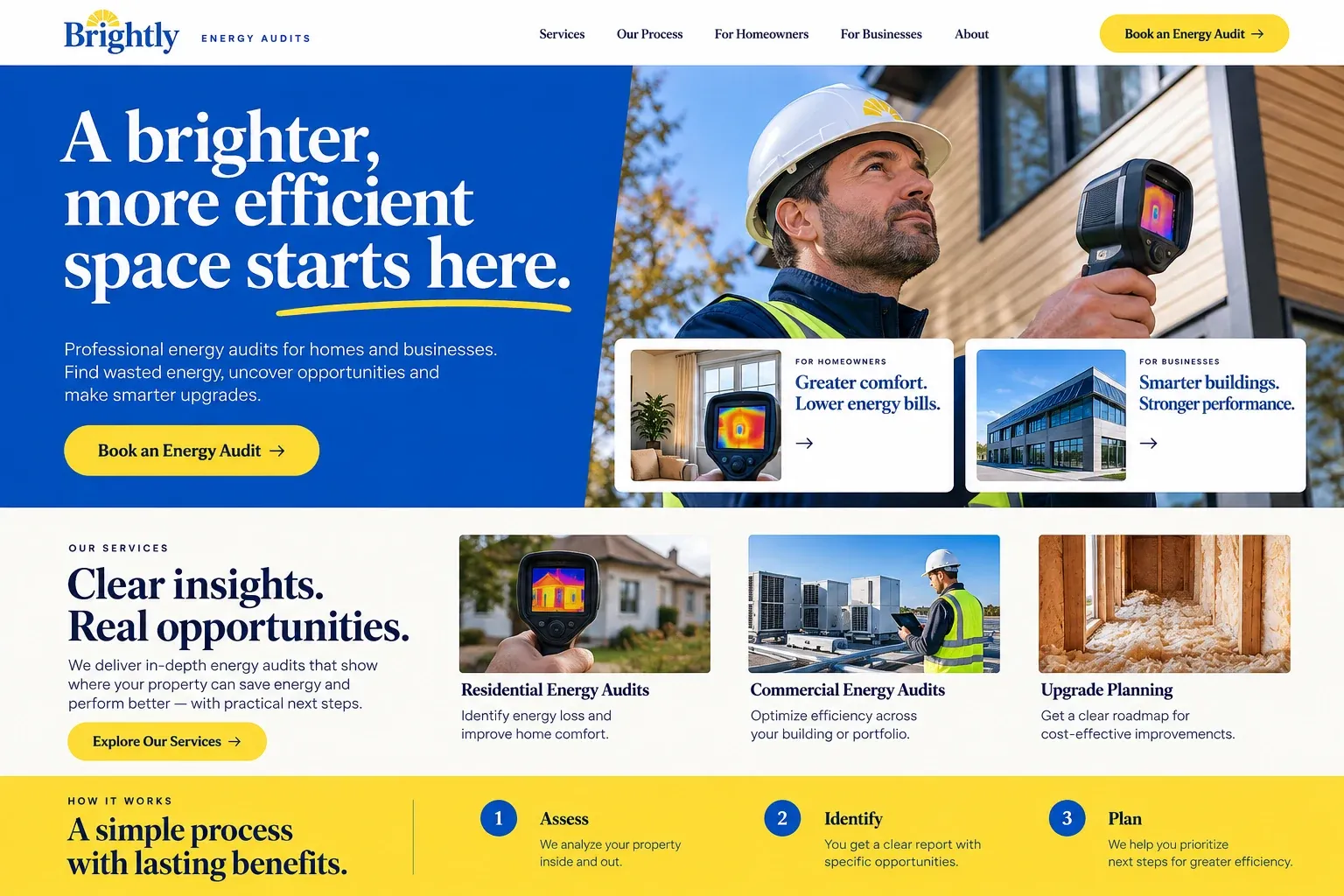
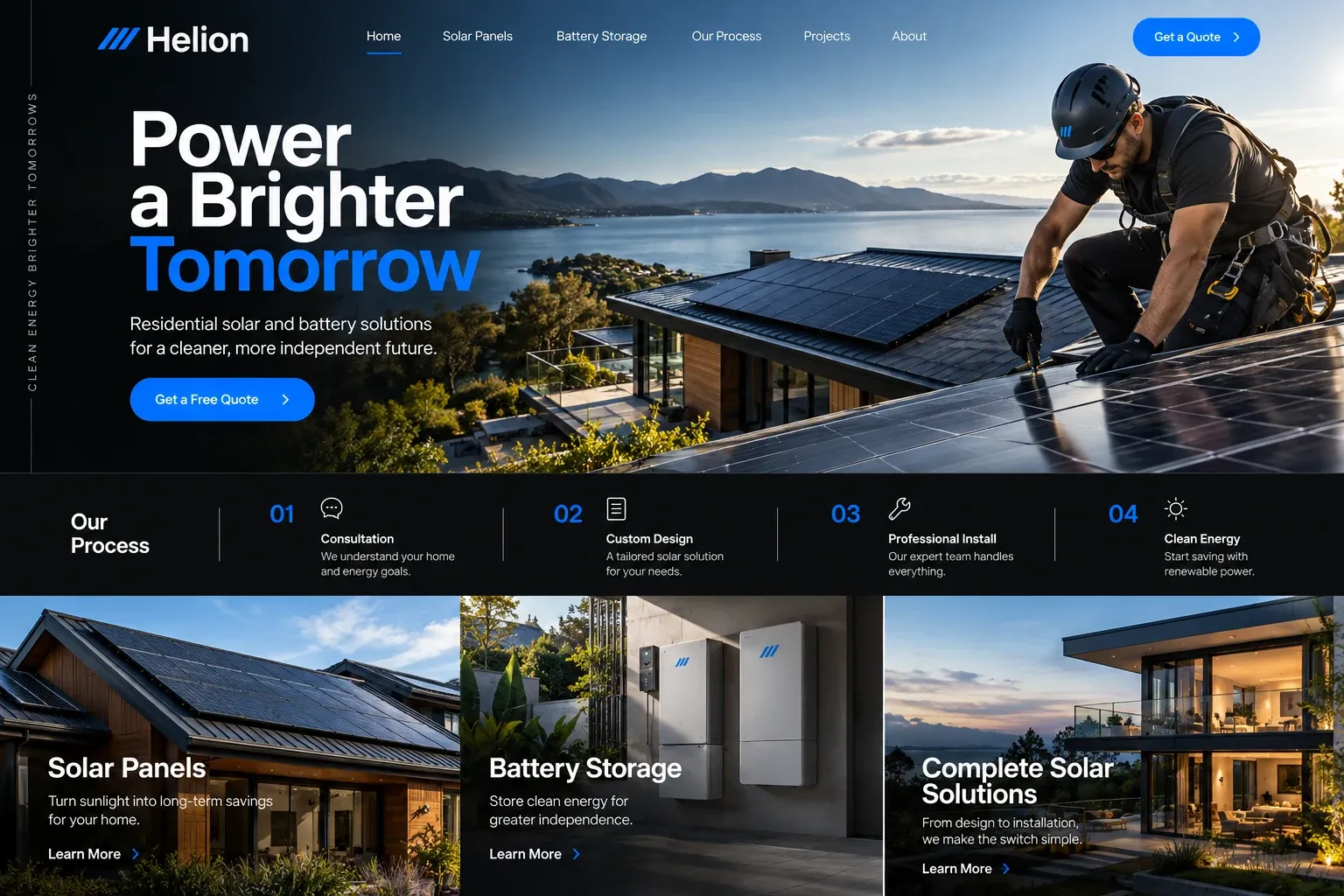
Fictional energy auditors website homepage design concept
A design concept for a fictional brand. Your site is designed from scratch around yours.

Your customer's story

A July power bill that makes no sense

Ken and his wife bought a two-story house in Pembroke Pines three summers ago. Every afternoon, the upstairs bedrooms are warmer than the rest of the house, the air conditioner runs constantly, and the electric bill climbs each July. A contractor wants to sell them a new system. A neighbor says it is the insulation. Another blames the windows. Ken wants to know before he spends anything.

He searches for a home energy audit and finds sites full of savings claims and pictures of light bulbs. One auditor's site is different. It explains the visit step by step, shows a blower door fitted to a front door and infrared images of an attic, and links to a sample report with findings grouped by priority. It also says plainly that the report lists observations, not promised savings.

Ken books the audit. He wanted someone to look at the house as a whole before choosing an upgrade, and the website showed him what that looks like. An energy auditor's website should explain the assessment, the equipment, and the report format, and help customers understand what they will be able to discuss once the visit is done.

Why it matters

Why energy auditors need a website.

Energy audits are a considered purchase. Homeowners arrive with a symptom, such as a hot room, high bills, or humidity, and a few competing opinions from contractors. They want an independent look before deciding. They search, read carefully, and compare what each auditor offers. A directory listing cannot explain a blower door test or show what a report looks like, and those are exactly the questions that decide the booking.

We build energy auditor websites that teach before they sell. An assessment overview walks through the visit. An equipment page explains blower doors, infrared cameras, and duct testing in plain language with real photos. A sample report shows how findings are organized. Pages for homeowners, builders, and businesses separate different needs, and the audit request asks about the property and the concerns that prompted the visit.

What your customers search for

  • home energy audit near me
  • energy audit Miami
  • blower door test
  • why is my upstairs so hot
  • duct leakage testing Miami
  • home energy assessment

Your customers

What homeowners ask before booking an energy audit

  • What happens during the visit?

    An assessment overview that walks through each step, from the walkthrough and attic check to the tests, and how long you will be in the home.

  • What is all that equipment?

    A page explaining the blower door, infrared camera, and duct testing in everyday words, with photos of each in use in real homes.

  • What will I get afterward?

    A sample report showing how findings are presented, ranked, and photographed, so homeowners know what they can discuss with contractors later.

  • Will this lower my bills?

    An honest note that the audit identifies issues and options, and that any savings depend on the upgrades chosen and how the home is used.

What we build

What a website for energy auditors should include.

  • Assessment overview

    A step-by-step description of the audit visit, from the first questions to the final walkthrough with the homeowner.

  • Equipment explained

    Blower door, infrared camera, duct leakage testing, and moisture meters, each described with a photo and a plain purpose.

  • Sample report page

    An anonymized report showing findings, photos, priorities, and how observations are kept separate from estimated outcomes.

  • Audit request form

    Property type, size, age, main concerns, and an optional upload of a recent utility bill, sent to your inbox.

  • Builder testing page

    For builders and contractors, a page on the testing you provide for new construction and how to schedule it.

  • After the audit guide

    A page on what homeowners can do next, including the kinds of contractors to talk to about each finding.

Planning guide

What should an energy auditor's website explain to homeowners?

Energy auditing is unfamiliar to most homeowners, so the website carries much of the explaining. It should describe the visit, the tools, and the report in plain language, while staying honest about savings. This guide covers the pages to build, what to show, how audit requests should work, and how an auditor gets found by local homeowners and builders.

Explain the visit from start to finish

Homeowners book more confidently when they can picture the appointment. Describe what happens in order: questions about the home and its problems, a walkthrough, the attic and duct check, blower door and infrared testing, and a final conversation. Say roughly how long it takes and whether anyone needs to be home. Mention what the homeowner should prepare, such as clearing access to the attic hatch and the air handler.

Show the tools and the report

Photos of your blower door in a real doorway, infrared images of missing insulation, and a duct tester on a return grille make the work tangible. Explain each tool in one or two sentences. Then publish an anonymized sample report so visitors see how findings are presented, photographed, and ranked. That sample answers the question most visitors cannot quite put into words: what will I actually get?

Keep claims honest. An audit identifies problems and options, but it cannot promise lower bills. Separate what you observed from any estimates, avoid figures you cannot support, and explain that results depend on the upgrades chosen and on how the household uses the home. Customers trust that candor, and it protects your reputation with the contractors you work alongside.

Ask useful questions on the request form

The audit request should ask for the property type, size, approximate age, and the concerns behind the request, such as hot rooms, humidity, or high bills. Offer an optional upload for a recent utility bill if the owner wants to share it. Separate requests from builders who need testing on new homes, since their scheduling and paperwork differ. Every request should reach your inbox ready for a callback.

Help homeowners and builders find you

Homeowners search for home energy audit, blower door test, and why is my house so hot, while builders search for energy code testing with a city name. Give each audience and each test its own page, list the areas you serve, and keep your Google Business Profile consistent with the site. Reviews from homeowners who describe the report help others decide. None of this promises a ranking.
In your market

Built for energy auditing in South Florida

Energy questions here are mostly about cooling. Air conditioners run for much of the year, attics get extremely hot, and ducts running through those attics can lose cool air when they leak. Humidity, sun-facing windows, and older homes with little insulation all affect comfort. Builders may also need blower door or duct testing to meet energy code requirements. Many homeowners are bilingual, so we can publish your explanations and request form in Spanish as well.

Questions

Questions energy auditors ask us.

How should an energy auditor talk about savings on the website?

Carefully. We describe what an audit finds and the kinds of improvements it can point to, and we explain that results depend on the upgrades chosen and how the home is used. We avoid specific savings figures unless you can document them, and you approve every line before it goes live.

Should we publish a sample energy audit report?

Yes, with personal details removed. A sample shows the structure of your findings, your photos and thermal images, and how you rank priorities. It answers the question most visitors have, which is what they will actually receive, and it shows the contractors you refer work to how you present problems.

Can builders request energy code testing through our website?

Yes. We add a builder page explaining the tests you provide for new construction and a separate form that asks for the project address, the permit stage, the number of homes, and the timeline. Those requests reach you apart from homeowner audits, so scheduling stays organized.

How do we explain blower door and infrared testing simply?

With a photo of each tool in use and two or three plain sentences: what it measures, why it matters, and what the homeowner sees during the visit. Short captions on real thermal images help most, because people understand a cold spot or a hot ceiling when they can see it.

Let's talk

Ready for a website built for energy auditors?

Tell us about your business and we will come back with a clear recommendation and a fixed quote. No pressure, no jargon.

Trades we design for

See all 226 trades

226 trades

  • Plumbers website design concept
CallFree quote