Web design for theaters and performing arts groups

Website design for theaters and performing arts groups.

Audiences decide on a show in a few minutes: what is playing, when, where, whether it suits them, and how to get a seat. The rest of the story, the company and its work, keeps them coming back.

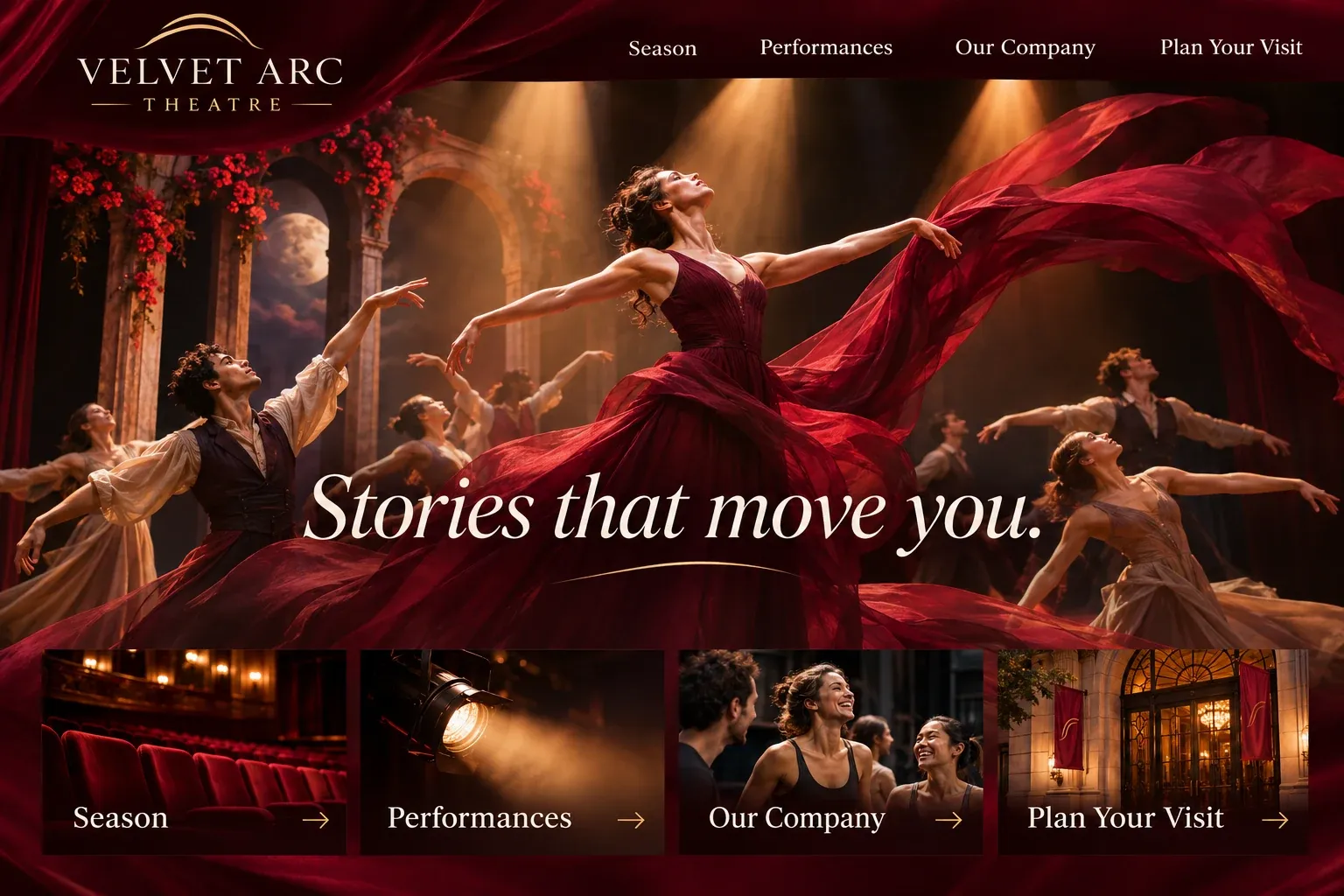
Website design concept for theaters and performing arts groups, an illustration
Illustration only: the design, business name and logo are made up to show the kind of website we can build. Not a real business or client website. Yours is designed from scratch around your brand.

Your customer's story

An anniversary and two seats on Saturday

Jorge forgot that Saturday is his and Carmen's anniversary until his sister reminds him on Wednesday. Carmen loves live theater, and he wants something better than dinner and a movie. At lunch he searches for plays near them this weekend. He knows nothing about the local theater scene and is nervous about choosing something she will not enjoy.

The first company's site shows last season's posters. The second lists a show title with no description and a ticket link that opens a confusing seating chart. The third has a page for its current production: a short, plain description, the running time, content notes, photos from rehearsals, the cast, and Saturday's curtain time. Under it are parking tips and a nearby restaurant list.

He buys two tickets, books a table around the corner, and reads the director's note so he can sound informed at dinner. Carmen is delighted, and they join the mailing list on the way out. A theater's website sells more than seats. It helps a nervous newcomer pick the right night, and it shows regulars why the company deserves their season.

Why it matters

Why theaters and performing arts groups need a website.

Theater and performing arts audiences mix loyal subscribers, curious newcomers, families, students and tourists. They want to know what is on, the dates, the length, whether it suits children, and how to get tickets. Ticketing platforms handle the sale but say little about the work or the company. Social media spreads news quickly but loses the season calendar, the production details and the venue information in a scrolling feed.

We build websites for theaters, dance companies, orchestras, choirs and other performing groups that keep the season front and center. Each production gets its own page with a description, dates, cast and creative team, content notes and a ticket link. A visit page covers the venue, parking, accessibility and dining. Education programs, auditions, membership and giving each have a clear home.

What your customers search for

  • plays near me this weekend
  • theater shows in Miami
  • dance performance near me
  • community theater auditions
  • spanish language theater Miami
  • kids theater classes near me

Your customers

What audiences want to know before buying tickets

  • What is the show about, and is it for us?

    A production page with a plain description, running time, age guidance and content notes, so audiences choose with confidence and are not surprised.

  • When is it on, and how do I get tickets?

    The full performance calendar with dates and curtain times, and a ticket button that opens your ticketing system on the right show.

  • Where is the venue and where do I park?

    A visit page with the address, parking, public transport, entrances, accessible seating, assisted listening and nearby places to eat.

  • Who is performing?

    Cast and creative team pages with photos and short biographies, plus the company's story, so audiences know who they are coming to see.

What we build

What a website for theaters and performing arts groups should include.

  • Season calendar

    Every production and concert of the season in one calendar, with dates, venues and a ticket link for each night.

  • Production pages

    Description, cast, creative team, photos, running time and content notes, built from the program notes you supply.

  • Ticketing and subscriptions

    Clear buttons into the ticketing platform you already use for single tickets, season subscriptions and group sales.

  • Company story

    The company's history, artistic vision, artistic leadership and ensemble members, told in your own voice and approved by you.

  • Visitor information

    Venue address, parking, accessibility services, late seating policy and dining nearby, kept on a page audiences can find quickly.

  • Auditions and education

    Audition notices, classes, youth programs and school matinees, each with a form or link for performers, parents and teachers.

Planning guide

What should a theater or performing arts group's website include?

A performing arts website works hardest in the weeks before each opening. It must make the current production irresistible and easy to buy, while showing the company's history and future to subscribers, donors and artists. Here is how to plan the pages, what to show, how audiences buy tickets and visit, and how the site helps new audiences find your work.

Pages built around the season

Start with a home page that features the current or next production, with dates and a ticket button. Add a season page, a page for each production, a visit page, an about page with the company's story and leadership, and pages for education, auditions, support and venue rental if you offer it. Keep an archive of past productions, which shows your history to funders, critics and artists who want to work with you.

Show the work and the people

Production photos, rehearsal shots and short video clips show audiences what a performance feels like far better than a poster alone. Use images you have rights to, credit photographers, and get the performers' permission. Introduce the cast and creative team with photos and short biographies, and write production descriptions in plain words that tell a newcomer what kind of evening to expect, along with running time and content notes.

Quote reviews only from real, published sources, and link to them where you can. Never invent praise or audience reactions. Honest detail helps newcomers pick a show they will enjoy, and those are the people who come back next season and bring their friends with them. A short note from the director adds warmth.

Make tickets and visiting easy

Most companies already use a ticketing platform. Link or embed it so each ticket button opens the right performance, and explain subscriptions, group tickets and student or rush options in plain words. A visit page should cover the venue address, parking, accessible seating, assisted listening, late seating rules and nearby dining. Audition notices need their own page with dates, requirements and a simple form. Keep forms short and send each one to the right person.

Help new audiences find your shows

People search for plays near me, things to do this weekend, a show title, or concerts in their city. Production pages with the title, venue, dates and a clear description give search engines exactly what they need to match those searches. Keep your Google Business Profile current with the venue address and photos, and list productions on local event calendars. This does not promise sold-out houses, but it helps curious people discover your work.
In your market

Built for the performing arts in South Florida

The performing arts here are bilingual and international, with theater in English and Spanish, dance rooted in Latin American and Caribbean traditions, and audiences that include tourists and seasonal residents. The main season runs through the winter, when visitors and seasonal residents are in town. Summer storms and hurricane season can force cancellations at short notice. We design sites where productions and notices are easy to update, pages read well on phones in a lobby, and a Spanish version can be added.

Questions

Questions theaters and performing arts groups ask us.

Can our theater website sell tickets directly?

We connect the ticketing platform you already use, so each ticket button opens the right performance and seating. The platform handles payments, seating and patron records, while your website does what ticketing pages cannot: describe the show, introduce the company and help audiences plan their visit.

How do we add a new production to the theater site?

We set up a production page format with description, dates, cast, photos, content notes and a ticket link. Your staff can add each show in a simple editor, and past productions move to an archive. If we look after the site, send the program notes and we publish the page.

Can our performing arts group post auditions on the website?

Yes. An auditions page can list upcoming calls with roles, dates, requirements and a short form or link to sign up. Performers can upload a headshot and resume through the form, and submissions go straight to your casting or company manager.

Can the theater website show performances in Spanish and English?

Yes. We can build a full Spanish version of the site and mark each production with its language and any surtitles, so audiences can choose the performance that suits them. Program notes can be translated as your team approves them.

Let's talk

Ready for a website built for theaters and performing arts groups?

Tell us about your business and we will come back with a clear recommendation and a fixed quote. No pressure, no jargon.

Trades we design for

See all 436 trades

436 trades

  • Plumbers website design concept
CallFree quote