Planning guide
What should a heavy equipment repair company's website include?
A heavy equipment repair website talks to busy people: contractors, site managers, fleet owners, and rental companies. They want to know what you work on, whether you come to the machine, and how you communicate. This guide covers the pages to build, what proof to show, how inquiries should work, and how the site helps local crews find you.
Map the site to machines and systems
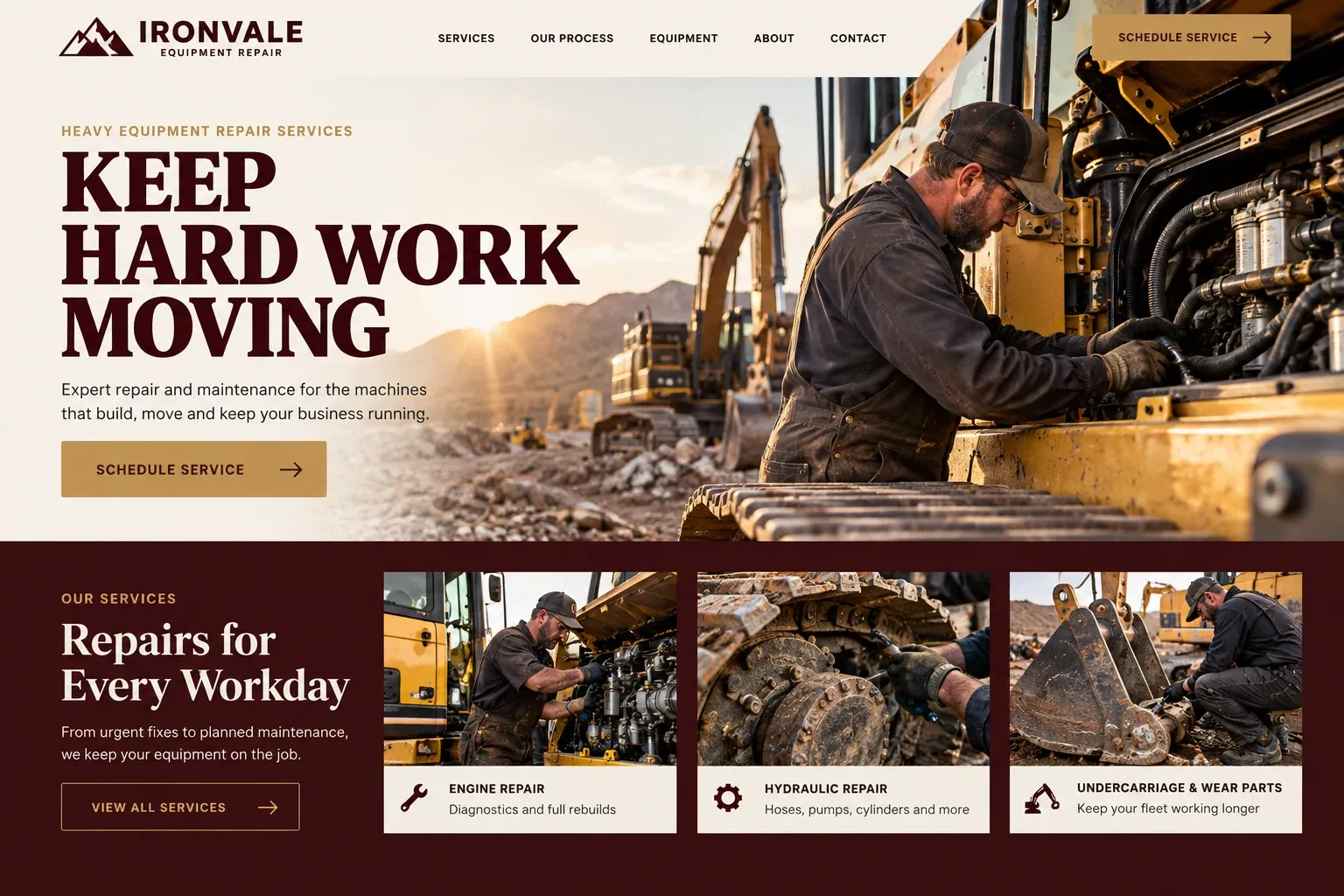
Buyers search by machine and by fault: excavator hydraulic repair, skid steer will not start, dozer undercarriage, loader transmission. Pages for each machine type and each major system let you name the brands you support and the repairs you do most. Add a field service page, a shop page, a fleet maintenance page, and a contact page with a clear inquiry form.
Prove capability with real equipment
Show the work you do: a cylinder rebuilt in your shop, a final drive replaced on site, a service truck set up at a jobsite. Real photos of your bays, cranes, and trucks say more than generic machinery images. List dealer or factory training only where it is genuine. If your shop size or crane capacity is worth noting, state it accurately and leave out anything you cannot back up.
Ask for the details dispatch needs
An equipment inquiry form should collect what your service writer asks on every call: make, model, serial number, hours, the symptom, the jobsite address, and how to get through the gate. Let customers attach photos of a leak or a fault code. The request arrives by email, so you can check parts and plan the truck before calling back.
The phone number belongs on every page as well, alongside your hours and whether anyone picks up after the crews go home. Explain how you report findings and get approval before larger work begins. A site manager who knows how communication will go is more likely to call you first the next time a machine goes down.
Show up where contractors search
Contractors search near the jobsite, not near your office. A service-area page naming the counties and corridors your field trucks cover gives search engines something to match, and so do machine and system pages. Keep business details consistent with your Google Business Profile, add real photos, and ask regular customers for reviews that mention the machine and the job. Rankings are never certain, but a clear structure helps.